

Psoriasis, Stress & the Nervous System: Why Your Skin Flares When You’re Overwhelmed (and What Helps)
If you live with psoriasis, you may have noticed something curious:
Your skin often worsens during stressful periods.
Deadlines. Family pressure. Emotional overload. Poor sleep. Anxiety.
That’s not coincidence.
Psoriasis is not only a skin condition. It’s an immune and nervous system condition that happens to show up on the skin.
As an integrative clinical hypnotherapist, I work daily with people whose bodies have been stuck in “survival mode” for years. Anxiety, overthinking, people-pleasing, emotional suppression, and chronic stress don’t just affect mood — they change how the immune system behaves.
And the skin is one of the first places this shows.
What psoriasis really is (beyond the skin)
Psoriasis is an auto-inflammatory immune condition where the body speeds up skin cell production and creates inflammation when it doesn’t need to.
This is driven by immune messengers that signal:
“There is danger. Increase inflammation. Grow skin faster.”
But for many people, there is no infection, no injury, no external threat.
The “danger” is coming from a nervous system that hasn’t felt safe for a long time.
The stress–skin connection
Your skin, brain, gut, and immune system are in constant conversation via stress hormones, the microbiome, and the Vagus nerve.
When the nervous system is stuck in fight/flight:
Cortisol and adrenaline stay elevated
Inflammation increases
Skin barrier repair slows
Sleep quality drops (when skin normally heals)
This is why psoriasis and stress are so closely linked.
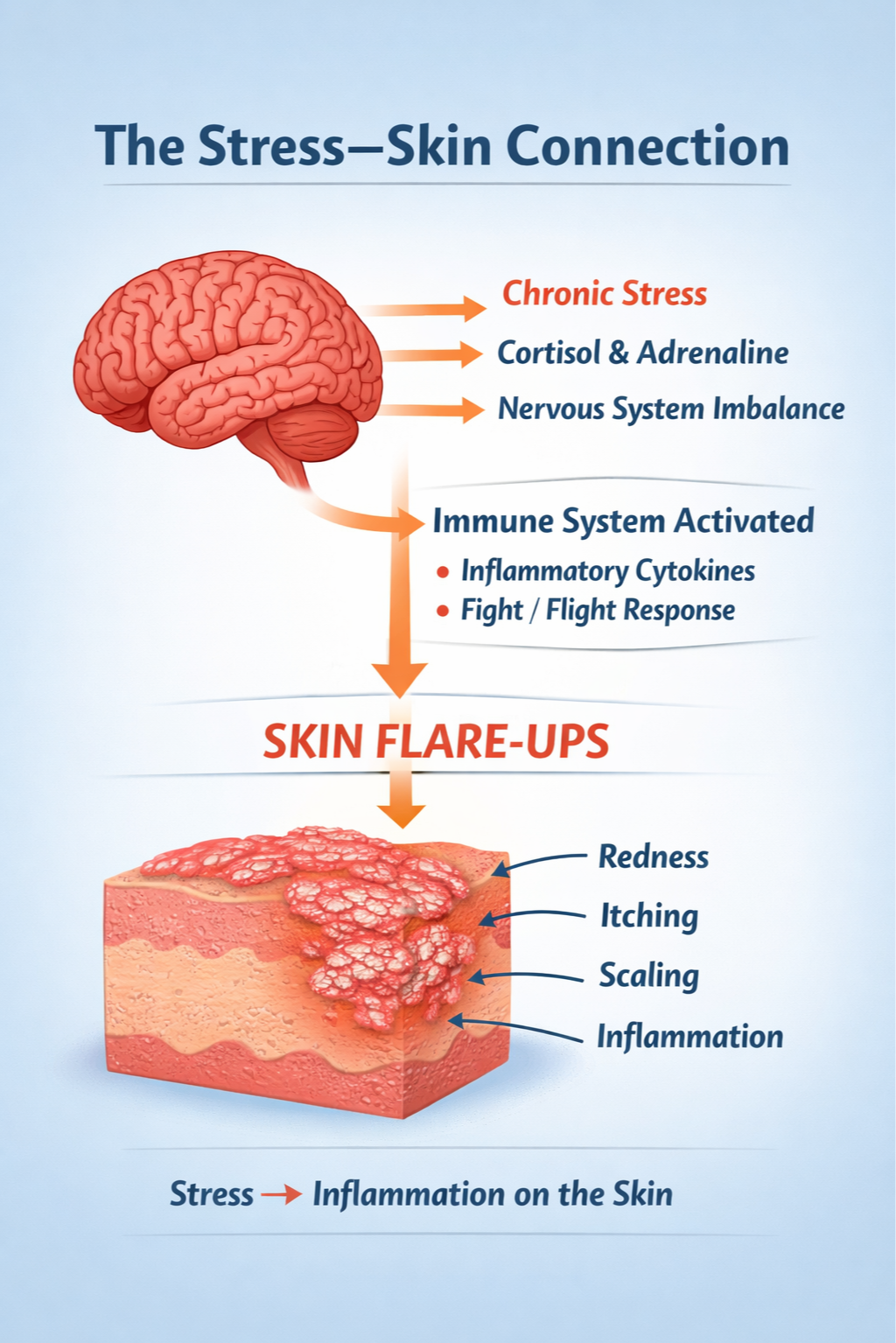
Diagram showing how stress in the brain and nervous system triggers immune inflammation and psoriasis skin flare-ups.
What are cytokines? (and why they matter in psoriasis)
Cytokines are tiny chemical messengers used by the immune system to communicate.
They tell the body when to create inflammation — and when to stop.
In psoriasis, certain pro-inflammatory cytokines become overactive, especially:
TNF-alpha
IL-17
IL-23
These cytokines effectively shout:
“Emergency! Send inflammation! Grow skin cells faster!”
This is also why many psoriasis medications (biologics) are designed to block these cytokines.
Here’s the key piece many people aren’t told:
The nervous system directly influences cytokine activity. When the body feels safe, inflammatory cytokines reduce. When the body feels under threat, they increase.
Why psoriasis often flares after stress
Many people report:
“My psoriasis always worsens after a stressful time.”
During stress, the body shifts into sympathetic dominance (fight/flight). This:
Raises inflammatory signalling
Disrupts immune balance
Slows healing
Disrupts sleep
Weakens skin repair
The flare is not random. It’s physiological.
The vagus nerve and inflammation
The Vagus nerve is the main pathway of the parasympathetic nervous system — the system responsible for rest, repair, and healing.
When stimulated through slow breathing, humming, warmth, gentle movement, and safety cues, it sends signals that:
Reduce inflammation
Calm immune overactivity
Increase anti-inflammatory cytokines
This is one reason nervous system regulation can be so supportive for people with psoriasis.
The gut–skin axis
The gut microbiome plays a major role in immune behaviour and skin health.
Supporting gut health can help reduce inflammatory load by:
Eating anti-inflammatory whole foods
Including omega-3 fats
Adding fermented foods
Reducing ultra-processed foods and alcohol
Slowing down while eating (reduces stress signalling)
The gut microbiome plays a major role in immune behaviour and skin health.
Supporting gut health can help reduce inflammatory load by:
Eating anti-inflammatory whole foods
Including omega-3 fats
Adding fermented foods
Reducing ultra-processed foods and alcohol
Slowing down while eating (reduces stress signalling)
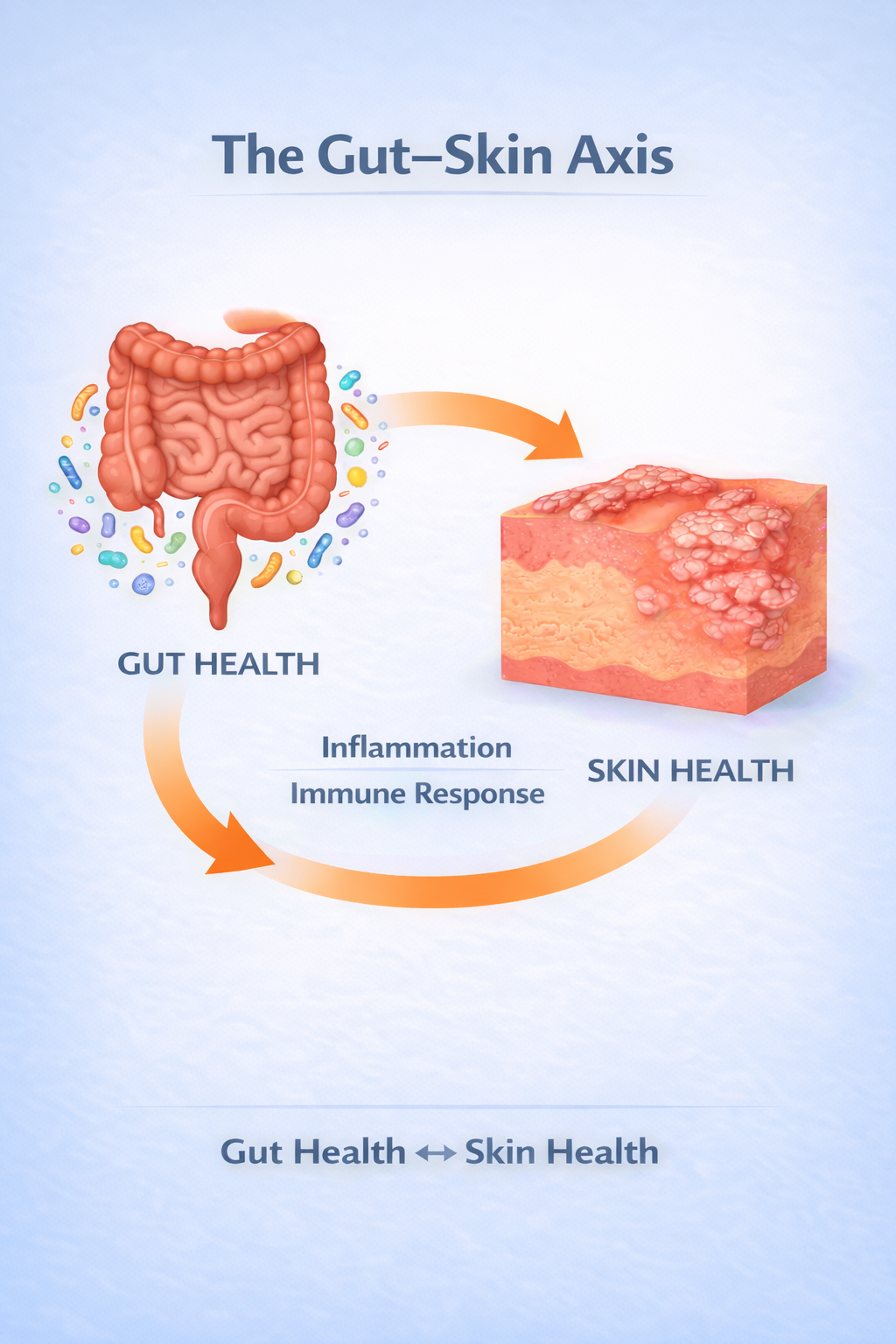
The gut and skin communicate through the immune system. When gut health is disrupted, inflammation can appear on the skin.
Why nervous system regulation helps psoriasis
This is not about “relaxing more.”
It’s about helping the body move out of a long-term survival state so the immune system no longer behaves as if there is constant danger.
When the nervous system feels safe:
Inflammatory cytokines reduce
Sleep improves
Healing speeds up
Immune balance returns
Skin repair improves
Psoriasis is not your body attacking you.
It’s your body asking for safety.
Practical daily steps to calm the immune system
Morning
3 minutes of slow breathing (long exhale)
Gentle sunlight on skin
Light stretching
During the day
Pause before meals
Notice and soften tension
Avoid rushing
Evening
Warm shower or bath
Low lights
Calming music or humming
Consistent sleep time
Weekly
Time in nature
Gentle movement
Therapeutic support
How hypnotherapy can support people with psoriasis
Many people with psoriasis share common patterns:
Long-term stress and anxiety
Feeling responsible for everyone
Emotional suppression
Perfectionism
Difficulty switching off
Hypnotherapy helps by calming the subconscious stress response and helping the body finally register a sense of safety.
This can reduce the physiological stress load that drives inflammatory signalling.
I regularly work with clients to:
Calm the nervous system
Release stored emotional stress
Improve sleep
Support immune balance through deep relaxation and safety cues
Frequently asked questions
Can stress cause psoriasis?
Stress doesn’t “cause” psoriasis, but it can significantly trigger and worsen flares through immune and inflammatory pathways.
Does anxiety make psoriasis worse?
Yes. Anxiety keeps the nervous system in a threat state, increasing inflammatory cytokines.
Can calming the nervous system help psoriasis?
Many people find that nervous system regulation reduces flare frequency and severity by improving immune balance.
What is the link between the immune system and psoriasis?
Psoriasis is driven by immune messengers (cytokines) that create unnecessary inflammation in the skin.
If this sounds familiar
If your psoriasis tends to flare during periods of stress, overwhelm, or anxiety, supporting your nervous system may be an important missing piece.
You can book a complimentary 30-minute consultation to explore whether this approach is right for you.